
Vitol CEO Flags India’s Russian Crude Appetite and “Oil on Water” as Key Drivers of Market Sentiment
OIL & GAS
Valentia Energy Partners Newsroom
2/13/20262 min read
Valentia Energy Partners Newsroom — Oil & Gas
Date: 02-13-2026
Market Snapshot
Brent: Low–mid $70s/bbl range
WTI: High $60s/bbl range
Trend Diagnosis:
Flat price remains range-bound, but visible floating supply and India’s buying patterns are steering near-term sentiment more than macro demand data.
The Why
According to Vitol’s CEO, two variables are shaping the current crude narrative:
1️⃣ India’s Continued Russian Crude Intake
India remains a major buyer of discounted Russian barrels, particularly Urals and ESPO-linked flows. As long as India absorbs these volumes:
Russian exports remain structurally supported.
Atlantic Basin dislocations persist.
Middle Eastern producers must compete more aggressively into Asia.
India’s strategy is economic, not political: discounted feedstock improves refining margins and export competitiveness for diesel and jet fuel.
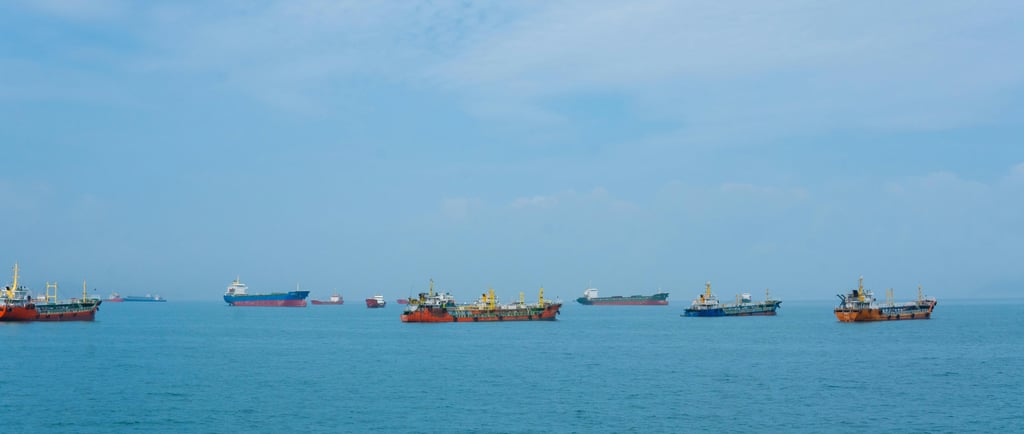
2️⃣ “Oil on Water” — Visible Floating Supply
The second driver is physical — cargoes already loaded and floating globally.
High volumes of crude and products “on water” create:
A perception of oversupply
Softer prompt differentials
Pressure on near-term time spreads
Even if underlying balances are tighter longer-term, traders price what they can see. And right now, there is material tonnage visible in transit.
What the Market Is Missing
📦 Oil on Water ≠ Structural Oversupply
Floating inventories often reflect:
Arbitrage trades in transit
Sanctions-compliant rerouting
Logistical congestion
Storage optimization
It does not necessarily mean global demand is weak.
🇮🇳 India as a Swing Refining Hub
India is no longer just a demand center. It is:
A refining exporter to Europe
A margin optimizer via Russian discounts
A pressure valve for sanctioned flows
This makes India a structural pivot in global crude redistribution, not just an end buyer.
Forward Outlook (Next 5–10 Days)
Time spreads: Watch Brent prompt spreads for signals of floating supply clearing.
Urals differentials: Any tightening signals stronger Indian appetite.
Freight rates: Elevated Aframax/Suezmax activity indicates sustained Russian flow rerouting.
Refined product exports from India: Diesel shipments into Europe will reflect refining margin health.
Cross-Market Signal
Middle East OSP pricing: May adjust if Asian competition intensifies.
European diesel margins: Influenced by Indian export flows.
Freight markets: Ton-mile demand remains elevated due to longer Russia-to-India and product-to-Europe routes.
Strategic Overlay
Missed Opportunities (Where We Level Up Fast)
Overreacting to floating supply without modeling discharge schedules.
Ignoring India’s role as a margin arbitrage hub.
Focusing on headline sanctions rather than shipping execution.
Strategic Implications (If Executed Well)
Procurement:
Secure feedstock diversity; don’t assume Russian barrels disappear — they reroute.
Hedging:
Time spreads and freight exposure offer cleaner plays than outright flat price.
Trade Execution:
The arbitrage window lives in transit timing and discharge optionality.
Bottom Line
Market sentiment is currently driven less by demand destruction and more by:
Where Russian barrels land
How much oil is visible on the water
And how quickly those cargoes clear
India’s buying discipline stabilizes Russian supply.
Floating barrels shape psychology.
But once cargoes discharge and refineries ramp, sentiment can flip quickly.
For ongoing analysis and execution-ready insights, subscribe to the Valentia Energy Partners Newsroom.