
U.S. Energy Secretary Meets Venezuelan Leadership in Caracas — A Herculean Push to Rebuild a Fallen Oil Giant
OIL & GAS
Valentia Energy Partners Newsroom
2/12/20263 min read

Valentia Energy Partners Newsroom — Oil & Gas
Date: 02-11-2026
Market Snapshot
Brent & WTI: Prices steady with a mild risk premium; Venezuelan supply prospects under tactical repricing.
Trend Diagnosis: Structural supply optionality emerging; tactical volatility tied to geopolitical and execution risk.
Key Highlights
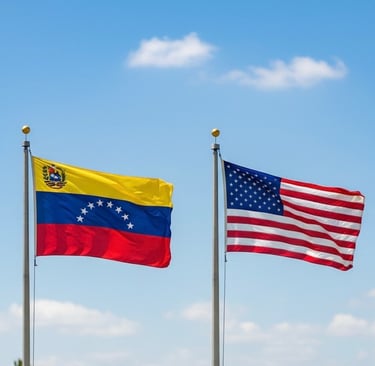
Diplomacy & strategy: U.S. Energy Secretary Chris Wright is on the ground in Caracas, meeting with interim President and Oil Minister Delcy Rodríguez and industry executives to advance oil sector recovery.
Policy signals: This visit — the highest-level U.S. energy engagement in Venezuela in nearly 30 years — follows new licensing to facilitate oil and gas investment.
Execution risk: Ambitious plans to revive Venezuela’s oil industry face severe infrastructure, security, and capital challenges.
The Why
The U.S. is now fully engaged at the highest policy and operational level to restart and restructure Venezuela’s oil sector, a country once capable of producing ~3.5 mb/d at its mid-20th-century peak and now running well under 1 mb/d. The Secretary’s Caracas meetings with interim leadership and industry players signal a shift from external rhetoric to on-the-ground assessment and coordination.
This effort dovetails with Washington’s broader geo-economic strategy to:
Leverage Venezuela’s reserves to diversify supply away from dominant Russian flows.
Attract U.S. and Western capital by aligning legal frameworks, sanctions policy, and operational licensing.
Stabilize production, with U.S. officials believing output could rise sharply with capital and operational upgrades.
But the mission is rightly described as herculean. Years of underinvestment, decayed infrastructure, diluent shortages, maintenance backlogs, and political risk make even short-term production upticks difficult without deep capital, security guarantees, and legal protections.
What the Market Is Missing
Most headline coverage frames this as a diplomatic “first visit in decades.” The execution-level realities tell a more complex story:
Operational risk vs sanction risk: While the U.S. has softened some sanctions and issued general licenses to enable investment, real field activity still hinges on infrastructure repair, technical upgrades, and contractor entry.
Capital commitment gap: Plans to boost production — often cited in double-digit % upside — require billions in investment before barrels flow at scale; that shift in capital commitment is not yet priced into crude curves.
Counterparty complexity: Deals must balance Venezuelan reform ambitions with insurance, financing, and contractor risk, especially for U.S. firms wary of political pushback.
In effect, the market is pricing possibility, not probability — and execution risk remains the dominant unknown.
Forward Outlook (Next 5–7 Days)
Field site signals: Look for public or private tours of key assets like Petropiar in the Orinoco Belt — operational status and field conditions will provide early barometers of practical feasibility.
Investment licensing: Clarification of individual investment license terms for major service companies (SLB, Halliburton, Baker Hughes) and oil majors will be a near-term execution indicator.
Production projections: Short-interval reporting from Venezuela on rig counts, vessel loadings, and maintenance schedules will signal whether recovery plans are actionable or aspirational.
Cross-Market Signal
Crude optionality: A credible Venezuela revival plan enhances global heavy-sour optionality, narrowing heavy differentials if volumes materialize.
Freight & logistics: Incremental ton-mile demand out of Venezuela could compete with West African routes into Europe and China.
FX & finance: Venezuelan sovereign risk and local currency dynamics remain tied to oil export execution, affecting credit and financing costs.
Strategic Overlay
Missed Opportunities — Where We Can Level Up Fast
Infrastructure mapping: Most models ignore the huge step-change in capex and contractor mobilizationneeded to restore fields; traders who model this will capture skew in spreads.
Legal certainty: Investors need credible dispute resolution and revenue flow governance; pricing markets miss this negotiation risk.
Strategic Implications — If Executed Well
Procurement: Long-dated offtake contracts anchored in phased production milestones will outperform spot-only strategies.
Hedging: Hedge desks should weight grade spreads (heavy vs light) and freight exposure over broad Brent/WTI positions.
Trade execution: Early movers aligning with logistics, compliance, and field execution will outperform late-cycle arbitrage plays.
For ongoing coverage of Latin America’s evolving energy landscape and execution-level trade-flow intelligence, subscribe to the Valentia Energy Partners Newsroom.