
Russian Crude Re-Routes via Singapore as Sanctioned Flows Quietly Pivot Toward China
OIL & GAS
Valentia Energy Partners Newsroom
2/9/20262 min read
Valentia Energy Partners Newsroom — Oil & Gas
Date: 02-09-2026
Market Snapshot
Brent: ~$82/bbl (most recent settlement)
WTI: ~$78/bbl (most recent settlement)
Trend Diagnosis: Structurally unchanged supply, tactically re-routed flows driven by execution and compliance constraints.
Key Highlights
OPEC+: No adjustment to quotas; Russian exports remain volume-stable but destination-opaque.
Asia demand: Chinese refiners continue absorbing discounted Russian barrels as India hesitates under policy pressure.
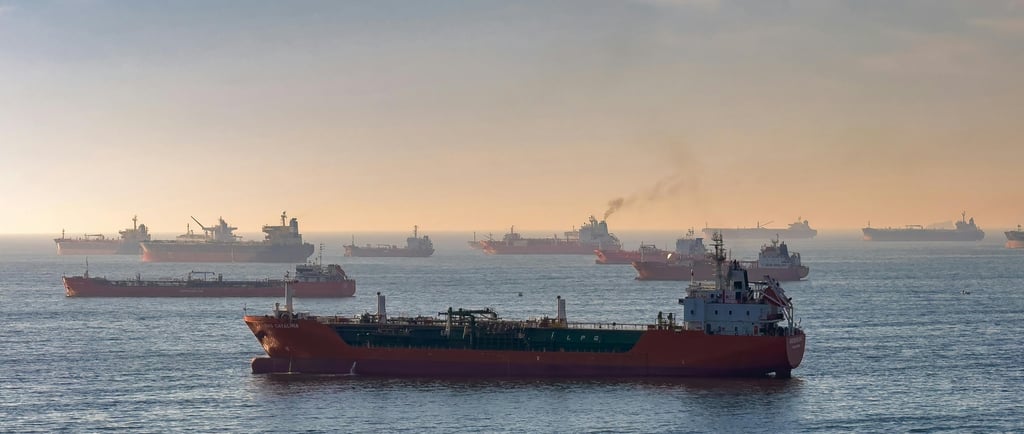
Freight & geopolitics: Tankers increasingly list Singapore as an interim destination, masking final discharge points amid sanctions scrutiny.
(Sources: shipping AIS data, market consensus, IEA/EIA)
The Why
Russian oil exporters are increasingly listing Singapore as a destination of record—not because the crude is meant for Singaporean consumption, but because Singapore functions as a logistical and documentary waypoint. This allows cargoes to retain flexibility for onward delivery—most often to China—while reducing immediate visibility under sanctions monitoring.
This behavior reflects a mature sanctions-playbook:
Preserve export volumes
Maintain buyer optionality
Minimize counterparty and compliance exposure
The barrels are moving; the paperwork is what’s being optimized.
What the Market Is Missing
This is not “shadow fleet theater.” It’s flow engineering:
Destination masking smooths execution risk and preserves freight optionality.
STS transfers and re-nominations allow final delivery decisions to be made closer to arrival, when policy and price signals are clearer.
Freight economics: Listing Singapore enables more flexible chartering and reduces the risk of last-minute cancellations tied to sanctions optics.
Flat prices don’t capture this—but margins do.
Forward Outlook (Next 5–7 Days)
AIS behavior: Watch for Singapore-listed tankers making quiet northbound turns toward Chinese discharge ports.
Price spreads: Urals/ESPO discounts to Brent and Dubai will remain the clearing mechanism for execution risk.
Cross-Market Signal
Freight: VLCC and Aframax availability tightens as vessels stay longer in “decision zones.”
Refining margins: Chinese refiners gain feedstock advantage; secondary Asian buyers lose optionality.
FX: Yuan settlement channels benefit as Russia-China trade deepens outside dollar systems.
Strategic Overlay
Missed Opportunities (Where We Can Level Up Fast)
Over-focusing on declared destinations rather than actual discharge behavior.
Ignoring Singapore’s role as a sanctions buffer node, not a demand center.
Strategic Implications (If Executed Well)
Procurement: Buyers with flexible intake windows can capture discounted barrels others can’t touch.
Hedging: Protect spreads and freight exposure—not just outright crude.
Trade execution: Advantage accrues to desks that treat documentation, routing, and pricing as one system.
For continued coverage and trade-flow intelligence, subscribe to the Valentia Energy Partners Newsroom.