
More Indian Refiners Take Venezuelan Oil as Commercial Pivot Reshapes Asian Crude Flows
OIL & GAS
Valentia Energy Partners Newsroom
2/9/20262 min read

Valentia Energy Partners Newsroom — Oil & Gas
Date: 02-09-2026
Market Snapshot
Brent & WTI: Benchmarks remain supported by structural scarcity but lack acute risk drivers.
Trend Diagnosis: Execution-level shift in crude sourcing, not a broad demand surge.
Key Highlights
Asia flows: Indian refiners, including Reliance, Indian Oil Corp (IOC), and Hindustan Petroleum Corp Ltd (HPCL), are stepping up purchases of Venezuelan heavy crude under U.S.-licensed marketing by traders.
Policy & logistics: India’s energy import strategy remains commercially driven despite U.S. rhetoric on redirecting flows from Russia; refiners are managing unwind periods for Russian crude.
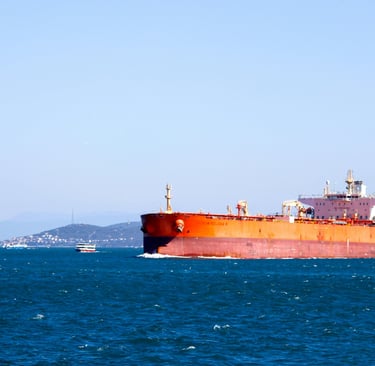
Freight & trade: Venezuelan barrels into the Indian market will affect VLCC deployment and ton-mile economics versus Middle East and Black Sea sourced crude.
The Why
A series of recent transactions signal Indian refiners are incrementally re-incorporating Venezuelan crude into their supply mix. State refiners IOC and HPCL have jointly purchased about 2 million barrels of Venezuelan Merey crudefor April delivery under U.S.-licensed arrangements through trading houses such as Trafigura.
This move complements Reliance Industries’ return to Venezuelan oil buying, also under market licences, representing a broader diversification away from predominant Russian crude supplies amid geopolitical and trade policy noise.
These purchases are commercially led — priced off benchmarks like Dubai or Brent discounts — and align with refiners’ heavy-crude capabilities, which optimize diesel yields and complex refinery economics. The underlying shift is not just tactical arbitrage: it reflects execution decisions driven by licence availability, refinery configuration, and margin calculus.
What the Market Is Missing
Policy vs reality: India publicly maintains energy autonomy; New Delhi’s official position underscores diversification based on commercial merit, not mandates.
Russian crude drag: Indian refiners still need wind-down periods for Russian flows; they aren’t wholesale abandoning Black Sea barrels overnight.
Flow execution: Venezuelan cargoes will face logistics and freight reallocation friction — tankers, scheduling, and port slots — which can create temporary bottlenecks or premium freight costs before arrival.
This isn’t just more barrels available — it’s a reshaping of import optionality that affects margin curves and ton-mile economics across the Asia-Europe trading axis.
Forward Outlook (Next 5–7 Days)
Cargo tracking: Early VLCC and Suezmax fixtures out of Venezuelan load ports to Indian discharge terminals will reveal how quickly these purchases convert to physical flows.
Spread moves: Watch Urals/Dubai and Brent/Dubai spreads as Indian demand signals will ripple through heavy-light pricing.
Cross-Market Signal
Refined product margins: Increased heavy crude availability may compress diesel cracks regionally if refiners can optimize slates.
Freight markets: Heightened vessel demand for longer hauls into the Indian subcontinent could support VLCC ton-mile premiums in the short term.
Strategic Overlay
Missed Opportunities — Where We Can Level Up Fast
Execution costs matter: Focusing solely on purchase headlines ignores logistics, compliance costs, insurances, and freight-timing risk.
Refinery asset readiness: Heavy crudes require specific conversion units; units capacity and reliability will define who captures margin.
Strategic Implications — If Executed Well
Procurement: Term negotiations must explicitly account for delivery windows, license conditions, and freight risk.
Hedging: Protect heavy-light spreads and freight exposure, not just Brent flat price.
Trade execution: Margins accrue to desks that anticipate policy drift, licensing windows, and refinery flexibilityahead of price signals.
For continued coverage and execution-level trade-flow intelligence, subscribe to the Valentia Energy Partners Newsroom.