
Iran Rejects Truce Claims as Strike Damages Dubai Oil Port, Escalating Gulf Energy Risks
OIL & GAS
Valentia Energy Partners Newsroom
3/17/20262 min read
March 16, 2026 | Valentia Energy Partners Newsroom
Executive Summary
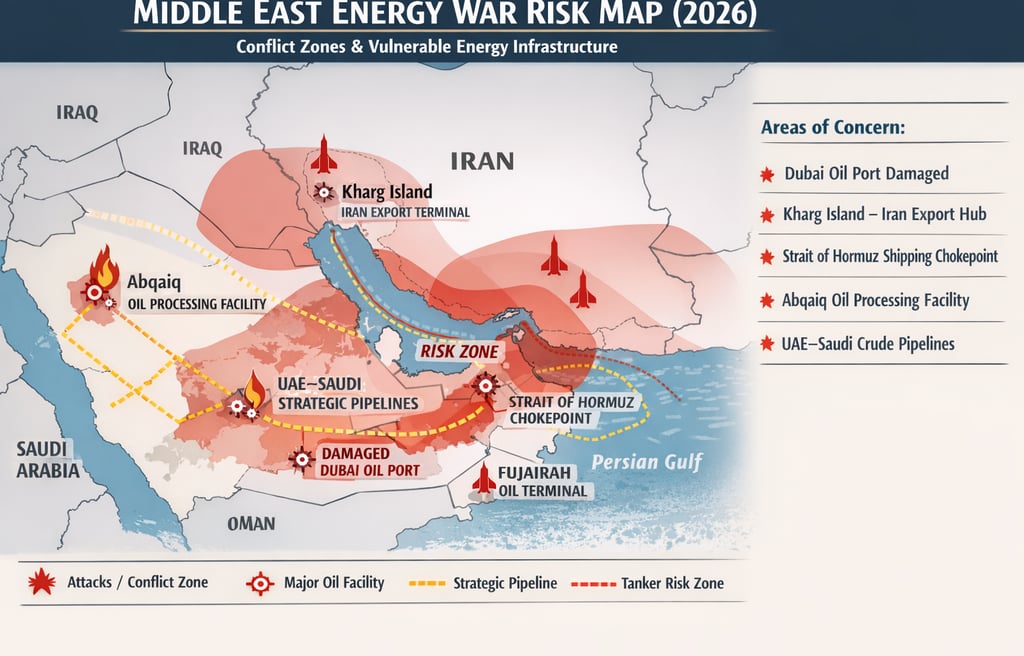
Iran has denied claims that it is seeking a ceasefire, even as attacks across the Persian Gulf reportedly damaged energy infrastructure near Dubai, raising fears of further disruption to regional oil logistics.
The incident marks another escalation in the widening regional conflict and highlights the vulnerability of Gulf energy hubs that underpin global oil supply chains. The strike reportedly damaged facilities near a key UAE oil export hub while also disrupting airport operations in Dubai.
For oil markets, the key concern is not only the physical damage but the signal that Gulf energy infrastructure is now within the active conflict zone.
What Happened
Reports indicate that:
Iranian-linked strikes targeted infrastructure across the Gulf region.
A major oil port area in Dubai sustained damage.
Flights at Dubai’s main airport were temporarily suspended following nearby attacks.
Iranian officials simultaneously rejected claims that Tehran is seeking negotiations or a truce, signaling a willingness to continue the confrontation.
Why This Matters to the Oil Market
The attack highlights how energy infrastructure in the Gulf remains exposed during regional conflict.
Key vulnerabilities include:
Export terminals
Oil storage facilities
Maritime bunkering hubs
Refining infrastructure
The United Arab Emirates is one of the world’s most important oil logistics centers, serving as a transit and storage hub for crude and refined products moving to Asia, Europe, and Africa.
Any damage or operational interruption in the region can ripple quickly through global energy markets.
Strategic Context: The Expanding Gulf Conflict
The latest developments come amid the ongoing 2026 confrontation between Iran and Western-backed forces, which has already triggered a broader maritime crisis around the Strait of Hormuz.
This crisis has led to:
Attacks on merchant vessels
Drone strikes on regional infrastructure
Military strikes on strategic oil facilities such as Kharg Island.
Because roughly 20% of global oil supply normally moves through Hormuz, the conflict has already forced shipping companies to suspend or reroute traffic.
Immediate Market Implications
▪ Infrastructure Risk Premium
Oil prices increasingly reflect the risk that export terminals or storage hubs could be disabled.
▪ Freight Market Shock
Shipping companies may demand higher war-risk premiums for Gulf voyages.
▪ Supply Chain Vulnerability
Ports like those in Dubai serve as critical logistics nodes for refined fuel trade, meaning even limited disruptions can tighten regional supply.
▪ Insurance Repricing
Marine insurers may rapidly increase coverage costs for tankers operating in the Gulf.
Strategic Signals Traders Are Watching
Operational status of UAE oil loading facilities
Tanker traffic through the Strait of Hormuz
Statements from Gulf producers including Saudi Aramco
Insurance rates for Gulf shipping routes
Any confirmation of sustained damage to oil infrastructure would likely push oil markets into a structural geopolitical risk rally.
Bottom Line
The reported damage to an oil port in Dubai marks a critical escalation in the Gulf conflict. Even if exports continue, the targeting of energy infrastructure significantly raises the stakes for global oil markets.
When ports and export hubs become part of the battlefield, the risk premium embedded in oil prices can expand rapidly.
Subscribe to the Valentia Energy Partners newsletter for more market intelligence, energy flow insights, and geopolitical risk analysis.