
Greek Shipping on Alert: Avoiding Iran’s Coast Signals Rising Execution Risk for Energy Flows Through Hormuz
Valentia Energy Partners Newsroom
2/1/20262 min read
Market Snapshot
Brent & WTI: Flat to slightly firmer on heightened freight risk premia.
Trend Diagnosis: Tactical risk repricing amid escalating maritime security concerns — structurally oil flows remain intact but freight dynamics are shifting.
Key Highlights:
OPEC+: Stable quotas; markets are sensitive not to output changes but to potential chokepoint risk.
U.S. production/export dynamics: U.S. crude and LNG exports provide alternative flows if Persian Gulf routes face disruption.
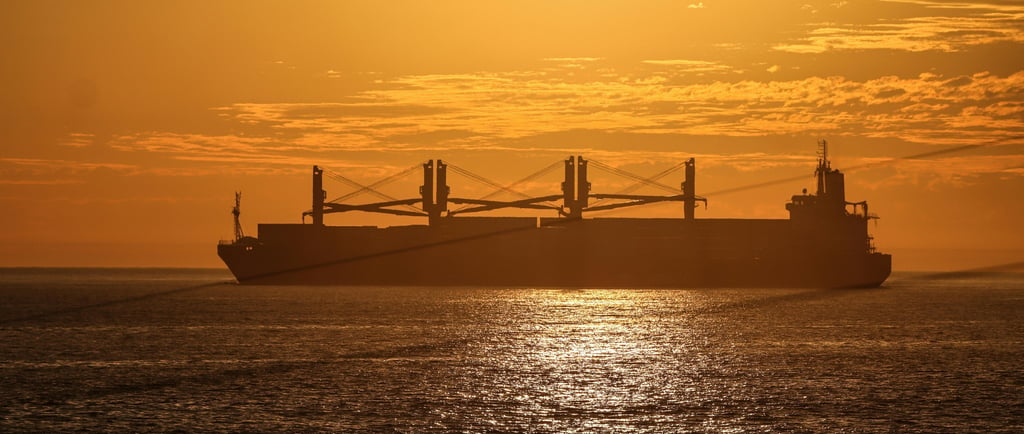
Geopolitical & freight disruptions: Greece — owner of the world’s largest tanker fleet — advised shipowners to steer clear of Iranian coastal waters near the Strait of Hormuz.
The Why
The Greek shipping ministry has issued advisories urging Greek-owned vessels to avoid transits near the Iranian coast and the Strait of Hormuz, instead hugging the UAE and Oman sides of the waterway where possible. With roughly a quarter of global seaborne crude passing through Hormuz — and a very high proportion carried on Greek-owned tonnage — this is not a marginal caution; it is a signal of elevated execution risk in oil and LNG logistics.
Greek shipowners handle a large share of VLCC, Suezmax, and Aframax capacity; advisories from Athens reflect heightened concern about military activities and sanctions-related escalation around Iran and the broader Gulf. The advice to steer toward the Gulf of Oman side translates into longer voyages, higher insurance premiums, and potential port scheduling frictions — variables that can alter freight cost curves even without a full closure of the chokepoint.
What the Market Is Missing
Headline coverage emphasizes national advisories and war risk. What physical traders are not fully internalizing is the ripple impact on ton-mile economics and routing patterns:
A shift to longer routing — even inside legal transit lanes — adds cost and timing uncertainty to Middle East crude and LPG flows bound for Europe and Asia.
Freight markets now price a risk premium not just for potential disruption, but for perception-driven rerouting behavior.
Insurance and war-risk surcharges are increasingly being embedded in charter rates for Persian Gulf to Asia and Mediterranean liftings.
Simply observing that ships may choose alternative tracks misses the execution cost — in time, risk premium, and scheduling — that affects refined product availability and crude delivery optionality.
Forward Outlook (Next 5–7 Days)
Freight rate watchers: VLCC and Aframax time charter equivalent rates, especially eastbound from the Gulf, will be the leading signal of risk repricing.
Security updates: Maritime security advisories (JMIC, BIMCO) and actual naval positioning around Hormuz and Gulf of Oman will be key leading indicators of when routing behavior normalizes or tightens further.
Cross-Market Signal
Freight & energy spreads: Rising freight risk premiums can widen LPG and refined product spreads relative to crude benchmarks as shipping cost enters price formation.
FX & inflation: Elevated freight costs and longer supply chains into Asia and Europe can apply inflationary pressure to refined fuel prices — a subtle cross-market linkage often overlooked.
Strategic Overlay
Missed Opportunities — Where the Market Can Level Up Fast
Integrated freight optimization: Desks that combine tanker routing, port scheduling, and cargo desirability can extract value ahead of broader market pricing adjustments.
Insurance cost arbitrage: Forward booking of tonnage and placement risk clauses can lock in lower war-risk premiums before they are fully priced.
Strategic Implications — If Executed Well
Procurement: Buyers in Asia and Europe should model routing risk into delivered cost curves rather than assuming default Gulf lifts.
Hedging: Consider freight derivatives or options where available to manage execution risk around Hormuz transits.
Trade execution: Structuring voyage charters with conditional routing flexibility will protect margins in unstable shipping envelopes.
For continued coverage and trade-flow intelligence, subscribe to the Valentia Energy Partners Newsroom.