
Crude Rallies 8% to Post-2024 High as Middle East Conflict Broadens
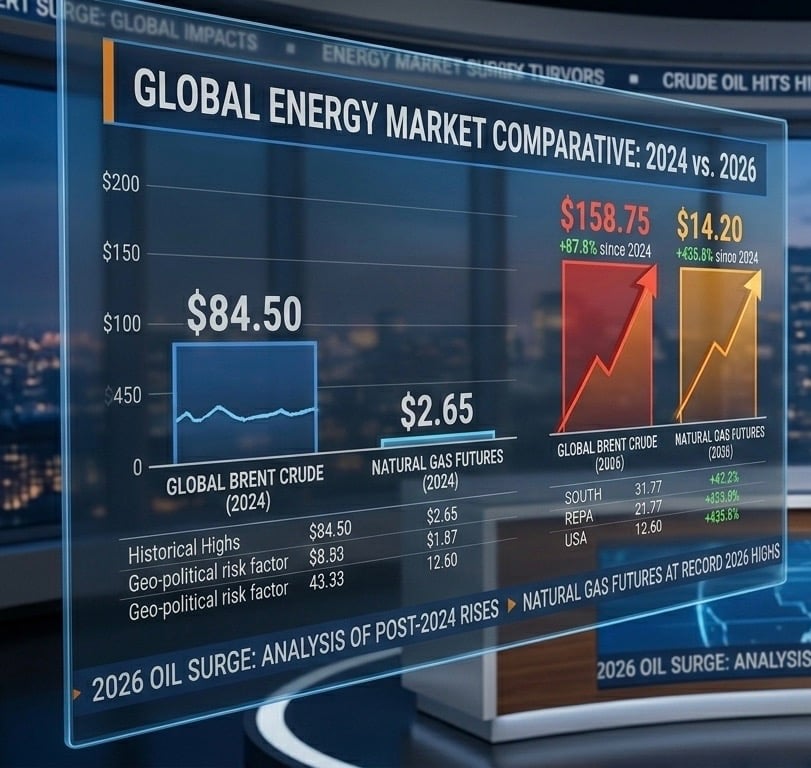
Oil prices surged 8%, marking the strongest single-day move in months and pushing benchmarks to their highest levels since 2024.
OIL & GAS
Valentia Energy Partners Newsroom
3/3/20262 min read
March 3, 2026 | Valentia Energy Partners Newsroom
Executive Summary
Oil prices surged 8%, marking the strongest single-day move in months and pushing benchmarks to their highest levels since 2024.
The move is not purely demand-driven. It is a geopolitical repricing event.
Markets are rapidly embedding:
Escalation risk across multiple Middle East fronts
Strait of Hormuz disruption probability
War-risk insurance spikes
Accelerating freight cost inflation
Tactical hedging by refiners and physical traders
This is a risk premium expansion phase.
Market Structure Shift
▪ Immediate Drivers
Broader regional conflict footprint
Increased military posturing near key shipping corridors
Heightened rhetoric between major producers
Surge in precautionary physical buying
Flat price reacted sharply, but spreads and freight are moving with equal force.
▪ Brent–WTI Dynamics
Brent premium widens on seaborne exposure
WTI follows via global arbitrage linkage
Atlantic Basin flows reprice first
Asia-bound cargoes face elevated freight risk
This is a maritime-driven price shock.
Flow Risk vs Supply Risk
It is critical to distinguish:
There is no confirmed large-scale supply outage yet.
The rally is driven by perceived flow vulnerability.
Key exposure points:
Strait of Hormuz transit
Red Sea shipping corridors
Eastern Mediterranean escalation risk
Insurance repricing across Gulf load zones
Even temporary delays can tighten prompt supply balances.
Freight & Insurance Acceleration
Freight markets often signal stress before crude benchmarks fully adjust.
Current pressure points:
War-risk premiums climbing sharply
Charterers fixing vessels earlier than normal
Ton-mile expansion from precautionary rerouting
Compliant tanker scarcity
Delivered crude costs are rising faster than headline oil prices.
OPEC+ Overlay
OPEC+ now faces a delicate balance:
Higher prices improve fiscal positioning
But sustained spikes risk demand destruction
Emergency supply messaging could be deployed
Strategic reserves rhetoric may re-emerge
The market will watch for coordinated communication.
🔎 Integrated Escalation Risk Snapshot — Early Q2
▪ Conflict Expansion
Multi-front risk perception increasing
Elevated probability of localized disruption
▪ Hormuz Sensitivity
Transit risk repriced
Insurance cost surge embedded
▪ Saudi & Gulf Export Strategy
Potential acceleration of rerouting plans
Pipeline capacity limitations remain
▪ Freight Tightness
VLCC and Suezmax rates rising
Effective fleet supply compressing
▪ Market Positioning
Short covering amplifying the move
CTA momentum flows adding upside pressure
What the Market Is Pricing Now
A non-zero probability of partial shipping disruption
Higher structural geopolitical premium into Q2
Elevated volatility regime vs 2025 averages
This is not yet a supply crisis.
It is a confidence shock.
Strategic Implications
Missed Opportunities
Under-hedged physical exposure
Delayed freight coverage
Over-reliance on flat price hedges
Strategic Considerations
Hedge freight alongside crude
Monitor insurance market shifts daily
Track tanker traffic density data
Watch OPEC+ signaling closely
Bottom Line
The 8% surge marks a transition from complacency to caution.
In geopolitical markets, price moves first.
Fundamentals validate later.
Q2 volatility has begun.
For execution-focused analysis on United States, Israel, Iran and Middle East conflict disruption, subscribe to the Valentia Energy Partners Newsroom for actionable insights.