
Crude Hits Six-Month High as US-Iran Conflict Risk Looms and Geopolitical Premium Surges
OIL & GAS
Valentia Energy Partners Newsroom
2/19/20262 min read
Valentia Energy Partners Newsroom
February 19, 2026
Market Snapshot
Brent: ~$71.6/bbl — Highest close since late July 2025
WTI: ~$66.4/bbl — Highest since early August 2025
Trend Diagnosis: Geopolitical risk premium dominates price action amid fears of potential US–Iran conflict and resulting supply disruption.
The Why
Oil markets have repriced sharply higher as U.S.–Iran tensions escalate, with traders placing a significant risk premium on the possibility of military confrontation that could impair crude flows from the Middle East. Recent data shows:
Brent and WTI rose ~2% on Thursday, settling at six-month highs.
The surge followed a >4% rally in preceding sessions as geopolitical anxiety intensified.
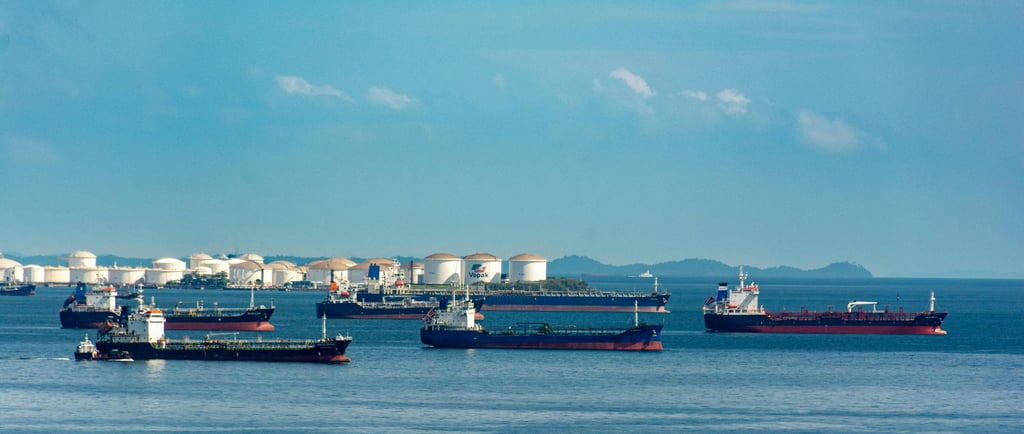
The continued uncertainty around nuclear talks, joint military exercises by Iran and Russia and discussions of potential U.S. action have heightened fear of supply risk through the Strait of Hormuz, a chokepoint that handles roughly one-fifth of seaborne crude shipments.
What the Market Is Missing
A six-month high is not just a headline — it reflects execution-level risk repricing:
Conditional risk premium: Prices are embedding the possibility of disruption rather than current supply deficits.
Freight and insurance costs: War-risk surcharges and higher bunker premiums often precede price moves in cash markets.
Physical shipment timing: If tensions escalate further, rerouting or delays through alternative corridors could add ton-mile costs that compress arbitrage windows between Atlantic and Asia markets — before flat price shifts materially.
This dynamic differs from fundamentals such as inventory builds/draws: it is about perceived execution risk rather than actual physical loss.
Forward Outlook (Next 5–7 Days)
Geopolitical developments: Any statements from Washington, Tehran, or allied capitals regarding negotiations or military positioning will move spreads faster than fundamentals.
Freight signals: VLCC/Aframax war-risk and route-adjustment pricing will indicate whether risk premiums are translating into logistic costs.
Inventory data: U.S. EIA and global stock reports will either reinforce or counter risk-driven pricing.
Cross-Market Signal
Refined Products: Middle distillate cracks may respond more acutely than crude if markets anticipate tight diesel supply from disruptions.
FX & risk assets: A stronger dollar and safe-haven flows into gold reflect broad risk repricing alongside oil.
Equities & sentiment: Energy stocks have rallied on oil strength, while broader stock indices are pressured by geopolitical and inflation uncertainty.
Strategic Overlay
Missed Opportunities — Where We Can Level Up Fast
Most positioning is focused on headline spot prices, not on conditional execution risk embedded in freight, insurance, and regulatory exposure.
Traders who fix positions solely based on inventory data risk underestimating the impact of chokepoint dynamics on spreads and forward curves.
Strategic Implications (If Executed Well)
Procurement: Build optional cargo strategies — align buying windows with geopolitical scenario triggers, not static price levels.
Hedging: Incorporate spreads and war-risk indicators (e.g., Brent-WTI and freight differentials) beyond simple flat price hedges.
Trade Execution: Advantage goes to desks that integrate real-time risk feeds, war-risk premiums, and freight curves with fundamental supply metrics.
For continuous, execution-level insights into geopolitical risk, flows, and market structures, subscribe to the Valentia Energy Partners Newsroom.